 SkyyCast
A blog post and a Bluesky thread are different formats doing different jobs, and copying one into the other produces a poor version of both. A post is a single page you can skim; a thread is a sequence of short beats, each capped at 300 characters, where every part has to stand on its own and pull the reader to the next. Adapting a post into a thread is a rewrite, not a paste. Here is a repeatable way to do it, plus the Bluesky-specific mechanics that shape the result.
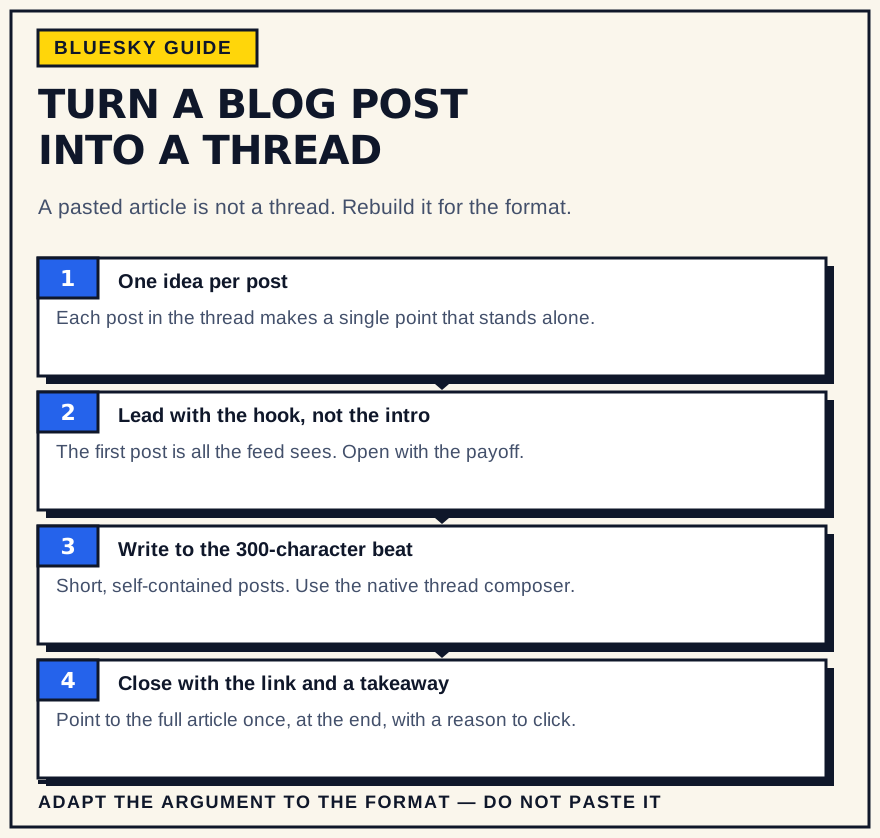
A blog post is not a thread
The most common mistake is treating the thread as a delivery vehicle for the whole article. It is not. A good thread takes one idea from the post — the single thing you most want someone to remember — and builds only that. The rest of the article stays where it is, and part of the thread's job is to send interested readers to it. Distil, do not dump.
That reframing does most of the work. Instead of asking “how do I fit 1,200 words into posts,” you ask “which one claim from this piece is worth a thread, and what are the five or six points that support it.”
It also solves the length problem before it starts. A thread built from a single claim naturally lands at five to eight posts. A thread that tries to represent the whole article sprawls past fifteen and loses people by the fourth.
The Bluesky mechanics that shape a thread
A few platform details change how you write:
- 300 characters per post. Bluesky counts graphemes — visible characters — and the limit is 300 per post, lower than Threads and just above X. Write each post in full, then cut it to fit; the cutting is where the clarity comes from.
- Links are not shortened. A full URL counts against the 300 as written, so a long link can eat a third of a post. Account for it, or use a shorter link.
- Alt text is free. Image descriptions do not count toward the limit, and the Bluesky community expects them. Always write alt text.
- There is a native thread composer. In the composer, the “+” button adds another post below the first, so you can write the whole thread at once, drag to reorder, and publish it together. It arrived in the Bluesky app in late 2024.
- You can limit replies. Thread gates let you choose who can reply — anyone, only people you follow, only mentioned accounts, or members of a list — set at the moment you post.
One gap: Bluesky does not let you schedule a thread natively. If you want one queued for a specific time, that runs through a scheduling tool that supports Bluesky threads — Buffer and Fedica both do.
Turning the post into a thread, step by step
- Pick the single takeaway. One thread carries one idea from the article. If the post has three big points, that is three possible threads, not one crowded one.
- Pull the supporting beats. Go back through the post and list the five to eight points, examples, or numbers that back that takeaway. Each becomes one post.
- Write the hook first, then rewrite it. The first post is the only one most people read. It should state the specific claim or tension, not announce that you published something. “New post 👇” is not a hook; “Most Bluesky accounts stall at the same point, and it is not the algorithm” is.
- Draft each post whole, then trim to 300. One idea per post. If a post needs two ideas, split it. Use short lines in your own words, not sentences lifted from the article.
- Place the link where it will be seen. Put the link to the full post in the final post as the payoff, and optionally in the first. Keep it in the post text, not tucked into a reply.
- Add one image to the hook, if it helps. A relevant chart or screenshot on the first post earns attention; decorative stock does not. Write the alt text.
- End with a next step. Close with the link and a reason to click, or a question that invites replies. Do not let the thread trail off.
A short worked example
Say the article is “Why Bluesky posts stall after your first 20 followers.” A compressed thread from it might run:
- Hook: “Almost every new Bluesky account hits the same wall around 20–30 followers. It is rarely the algorithm — Bluesky barely has one. Here is what is actually going on.”
- Beat 1: the Following feed is chronological, so your posts reach only people who already follow you — nothing is filling the gap.
- Beat 2: growth past that point comes from custom feeds and replies, not from posting more into the void.
- Close: “Full breakdown, with the three feeds worth targeting: [link]”
Four posts, one idea, a clear door back to the article. That is the target shape. You could pull two or three more threads from the same piece later — a different takeaway each time — without repeating yourself.
Common mistakes
- Threading the whole article. Ten or more posts almost no one finishes. Five to eight is plenty for one idea.
- Pasting paragraphs. Blog sentences run long and read as walls once they are stacked. Rewrite for the format.
- A hook that summarizes. If the first post tries to say everything, there is no reason to read on.
- One link, badly placed. If the only link sits in a mid-thread reply, most readers never reach it.
- Skipping alt text. Threads often carry an image or two. Missing alt text reads as careless on Bluesky and drops the post out of accessibility-filtered feeds.
- Reposting the identical thread. When the article resurfaces, write a fresh hook rather than republishing the same posts word for word.
The bottom line
Turning a blog post into a Bluesky thread is a rewrite around one idea: pick the takeaway, pull a handful of supporting beats, lead with a real hook, and cut each post to 300 characters. Done once or twice it is slow; built into a repeatable workflow and planned alongside the rest of your calendar, it becomes one of the cheapest ways to get more out of writing you have already done.