 SkyyCast
The worst time to notice a broken link is ten minutes after the post goes out, when it already has a reply pointing it out. Most social media mistakes are not strategic. They are small, avoidable errors that slip through because publishing is the last thing you do at the end of a long stretch of work and nobody looks twice. A short check before you post catches almost all of them. What follows is a run-through you can do in about a minute and a half, grouped so it feels like a habit rather than paperwork.
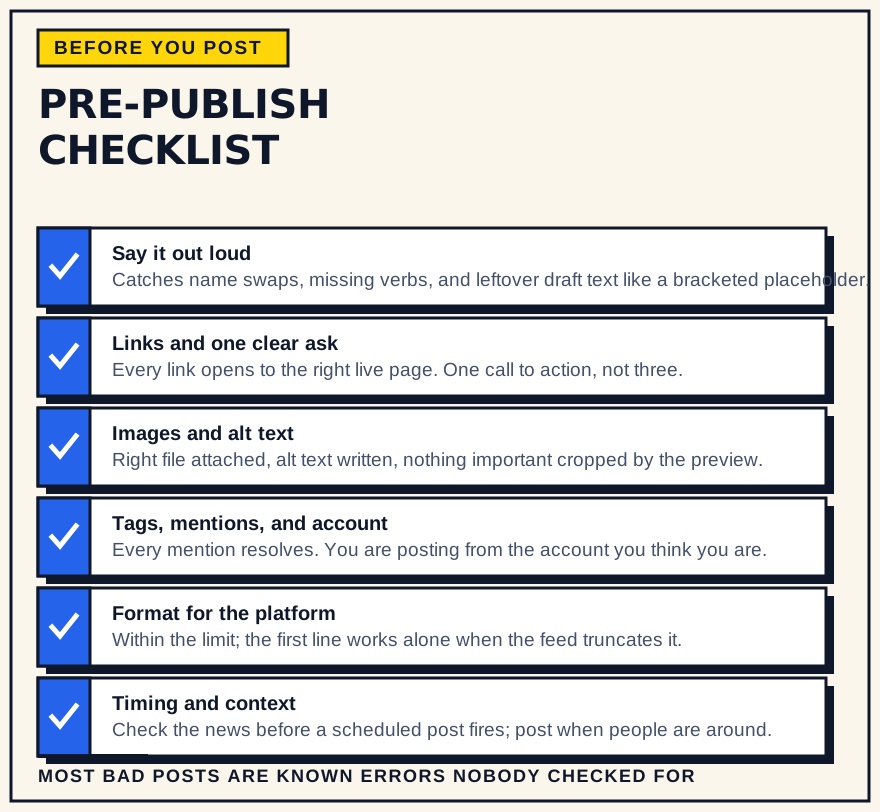
Why a checklist beats "just being careful"
Being careful is a mood, and moods run out. The value of a fixed list is that it works the same on a Friday afternoon as on a Monday morning. Aviation and surgery adopted checklists for exactly this reason: not because the people involved were careless, but because a written prompt catches the step a tired expert skips. A social post is far lower stakes, but the logic holds. The mistake you make is almost never one you didn't know about. It's one you didn't check for.
The other benefit is speed. Once the list is familiar, running it takes less time than the anxious re-reading you'd do instead, and it actually resolves the anxiety because you've looked at the specific things that tend to go wrong.
Read it once, out loud
Read the post aloud before anything else. Your eye skims text you wrote; your ear doesn't. This is where you catch the autocorrect swap that turned a name into a different word, the sentence that lost a verb in editing, and the line that sounded clever in your head and lands wrong out loud.
While you're there, confirm two things. First, any factual claim in the post is actually true and you could defend it if someone pushed back. Second, there's no leftover scaffolding: a bracketed "[link here]", a note to yourself, a placeholder date. Draft debris in a live post is common and always looks careless.
Links and one clear ask
Click every link. Confirm it opens, goes where the anchor text or preview promises, and that the destination page is live and readable on a phone. A link that 404s or points to a staging URL is the single most-reported post error, and it's completely preventable in the ten seconds it takes to open it.
If you use tracking parameters, check they're on the link and that they're the right ones. A stale campaign tag copied from last month's post quietly corrupts your analytics, which is arguably worse than having no tracking at all. Google's guide to custom campaign URLs is the reference if you're setting these by hand.
Then count the calls to action. There should be one. A post that asks readers to reply, click through, and share usually gets none of the three done. Decide what this specific post is for and cut the other asks.
Images, video, and alt text
Confirm the right file is attached. "Last week's graphic on this week's post" happens more than anyone admits, especially when you're reusing a template.
Write alt text for every image that carries meaning. It's the accessible description screen-reader users hear, and on several platforms it's indexed, so it does quiet work for discovery too. Describe what's actually in the image and what it's there to show; the W3C's alt decision tree is a good short guide, and it's worth reading our piece on alt text if you want the longer version. If a graphic is text-heavy, put the key line in the post copy too, since not everyone will open the image.
Check the crop. Feed previews often use a different aspect ratio than the full image, and faces or captions can get sliced off. For video, make sure on-screen text or captions carry the message for the large share of people who watch with the sound off. And confirm you actually have the right to use the image, including permission from any identifiable people in it.
Tags, mentions, and the account you're on
Every @mention should resolve to the correct account. Near-identical handles are everywhere, and tagging the wrong "official" account either wastes the mention or drags in someone unrelated. Type them, don't trust a half-remembered handle.
Check hashtag spelling, and check that the tag means what you think. Run-together words occasionally read as something unfortunate, and a misspelled tag is just invisible.
Then the one that causes real damage: confirm you're posting from the account you think you are. A personal aside sent from a brand login, or a client's post published to your own agency feed, is the mistake that turns into a screenshot. If you manage more than one account, make this the check you never skip.
Format for the platform
Confirm the post is within the platform's length limit and still reads well when the feed truncates it. Write the first sentence so it works as the whole post, because on most networks the rest sits behind a "more" link that most people won't tap.
Paste the text into the actual composer rather than trusting your draft. Line breaks, spacing, and emoji don't always survive the copy, and an emoji that renders on your phone may show as an empty box elsewhere. If it's a thread, read it top to bottom in order and make sure each post stands on its own enough to make sense if someone sees only that one.
Timing and context
For anything scheduled, glance at the news before it fires, or set a habit of checking your queue each morning. A cheerful promotional post is fine on a normal day and tone-deaf next to a breaking story, and the post won't know the difference. This is the main risk of scheduling ahead, and a ten-second check neutralises it.
Where you can, post when your audience is actually around rather than simply when you finished writing. If you batch and schedule a week at a time, run this whole check as you queue each post, not in one blurry pass at the end.
Make it yours
Keep the list where you publish: a pinned note, a card beside the composer, the top of your content doc. Then trim it to the mistakes you personally make. A checklist full of things you never get wrong is noise that trains you to ignore it. If a team shares the account, agree on who owns the final check, so it isn't "everyone, and therefore no one."
There's one situation to skip most of this: live posting. Replying in real time, covering an event, reacting fast to something breaking — a six-part checklist there kills the timing that makes the post worth sending. For live posting, keep a single habit: check which account you're on before you hit send.
Bottom line
Almost every post you'd want back is a known error that no one checked for. Ninety seconds against a fixed list — meaning, links, media, tags, format, timing — catches the ones that matter. Build your own version from the mistakes you actually make, keep it where you post, and before long it stops being a rule and becomes the thing your hand does before it reaches for publish.