 SkyyCast
Audience research is easier on Bluesky than on a closed platform, because the network is public: the accounts people follow, the replies they leave, and the questions they ask are all visible without a login wall or a paid API. You do not need a listening tool to do the useful part. The useful part is finding the accounts your intended audience already follows, reading what they ask and complain about, and noticing what nobody is answering well. Here is a workflow for that.
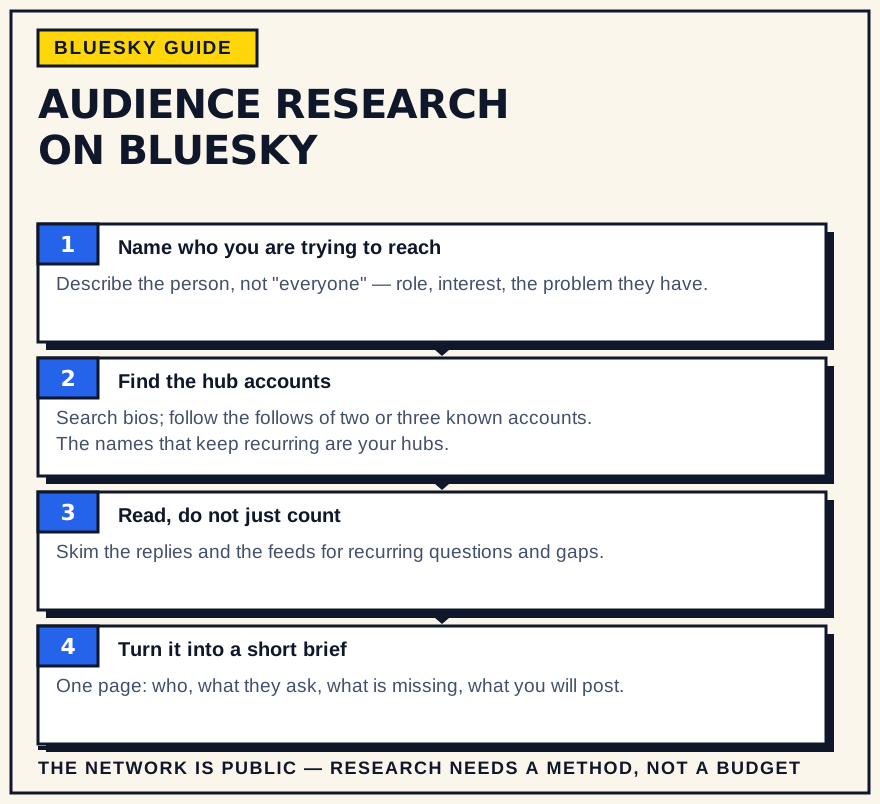
First, name who you are trying to reach
Write one sentence: “people who ___ and want ___.” “Freelance illustrators who want more consistent client work” is researchable; “creatives” is not. Everything below is filtered through that sentence — if a step does not help you understand that specific group better, skip it. The sentence also tells you which hubs count: a feed for “illustration” is too broad; “freelance and commission work” is the part you care about.
Find the accounts at the centre of that audience
You are looking for the ten to twenty accounts your target audience clusters around, plus a handful of feeds. A few ways to build that list:
- Search bios for your topic. Accounts that describe themselves with your keywords are a starting set.
- Follow the follows. Open a well-known account in the space and look at who it follows and who follows it. Do the same for two or three others; the names that keep recurring are your hubs.
- Check overlap. A high overlap between your follows and someone else's — or between your followers and theirs — is a rough signal that you are reaching the same people.
- Read the starter packs. There is usually a starter pack, or several, for a given community. A pack directory maps a whole scene in one place, and the pack's creator is often a hub account themselves.
Read, don't just count
Follower counts tell you almost nothing useful. The value is in the replies, quote-posts, and questions. Go through your hub accounts' replies and the niche feeds and note four things: the questions that come up again and again, the complaints, the words people actually use for the topic, and — most useful — the questions that get asked and never answered well. That last category is your opening. Keep a running note or doc as you go, and paste the actual replies and questions rather than a paraphrase, so the wording survives.
Use search like a researcher
Bluesky's search bar takes operators, which turns “what are people saying about this” into a repeatable query. The set includes from: for a specific account, since: and until: for a date range, lang: for a language, quotation marks for an exact phrase, AND for combining terms, and #tag for a hashtag. Pair your topic with “how do I” or “why does” to surface questions; add a date range around an event to see how a moment was discussed. Save the queries that work so you can re-run them.
Look at the adjacent and competing accounts
Find two or three accounts serving a similar audience and study them, not to copy but to find the gap. What formats land for them? What questions do they get in the replies that they never address? Where does their audience push back or ask for more? Pay attention to which of their posts get genuine replies versus polite likes; the reply threads are where the audience tells you what it actually wants. The unmet need in someone else's replies is usually a better guide to what to make than their best-performing post.
Turn it into a short brief
Research you cannot act on is a waste. Write the findings as five short lines: who the audience is, the three or four accounts and feeds that best represent them, the five questions they keep asking, the words they use for the topic so your posts match, and the one gap you can fill better than anyone currently is. That brief is what you check your posts against, and it is small enough to update in ten minutes each month.
When to reach for tools
You can go a long way with reading alone. When you want more: free account-analysis tools build relationship maps, show mutual follows, and track who followed or unfollowed you; at an organisation level, social-listening platforms ingest Bluesky's public data to catch mentions and gauge sentiment even when you are not tagged. Bluesky's own Attie can answer open questions about the network — which accounts are influential in a niche, what is being discussed. None of this is required to start, and none of it replaces reading the replies yourself.
A light ongoing version
Do the full pass once, when you start an account or change its focus. After that it is a twenty-minute monthly habit: skim the hub feeds, note any new recurring question, drop it into your idea list, and adjust your calendar if a real gap has opened up. Folding that into your normal routine keeps your sense of the audience current without a research project every quarter.
Do it respectfully
It is public data, but people posted for their followers, not to be profiled. Read and learn from it; do not scrape at scale, do not automate outreach off what you find, and do not turn someone's posts into a targeting dossier. The goal is to understand a community well enough to be useful to it, not to work it.
Bottom line
Because Bluesky is open, audience research is mostly reading with intent. Name your audience in one sentence, find the ten to twenty accounts and few feeds at its centre, read the replies for recurring questions and unanswered ones, and let that shape what you post. Tools help once you are operating at scale; they are not where you begin.